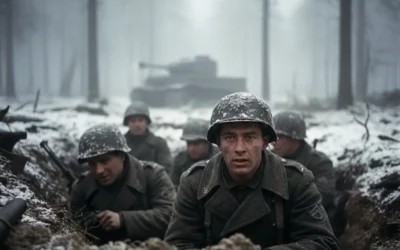
The course of World War II shifted dramatically on the cold, sandy beaches of northern France in the spring of 1940. Before the United States entered the conflict and years before the triumph of D-Day, the Allied forces faced near-total annihilation. Trapped against the sea by the relentless German Army, over 300,000 soldiers waited for deliverance or death. This event, known as the miracle of dunkirk, remains one of the most pivotal moments in military history. It was not a victory in the traditional sense, but a survival story that allowed Britain to stay in the war.
For American travelers visiting France to understand the scale of the Second World War, grasping the events of 1940 is essential. While our tours focus heavily on the 1944 Normandy landings, the evacuation at Dunkirk sets the stage for everything that followed. It represents the darkest hour before the dawn of liberation. Understanding the desperation and the subsequent “Dunkirk Spirit” provides a profound context for the eventual return of Allied forces to French soil four years later. We believe that to truly appreciate the victory of Normandy, you must first understand the survival of Dunkirk.
The Trap Closes on the Allied Forces
In May 1940, the German “Blitzkrieg” or lightning war shattered the defenses of Western Europe. The speed of the German Panzer divisions caught the British Expeditionary Force (BEF) and French armies completely off guard. Unlike the static trench warfare of World War I, this new form of combat was fluid, fast, and devastating. Within weeks, the German forces had sliced through the Ardennes, bypassed the Maginot Line, and effectively cut the Allied armies in two. The British forces found themselves pushed back toward the English Channel, retreating to the port town of Dunkirk.
The situation was catastrophic. On one side, the ocean blocked their escape; on the other, the tightening ring of German steel pressed closer every hour. Supplies were running low, morale was tested, and the Luftwaffe controlled the skies. The British High Command initially estimated that perhaps only 45,000 men could be saved before the Germans took the port. The prospect of the entire British army being captured or killed was a terrifying reality that would have likely forced Britain to surrender, changing the world map forever.
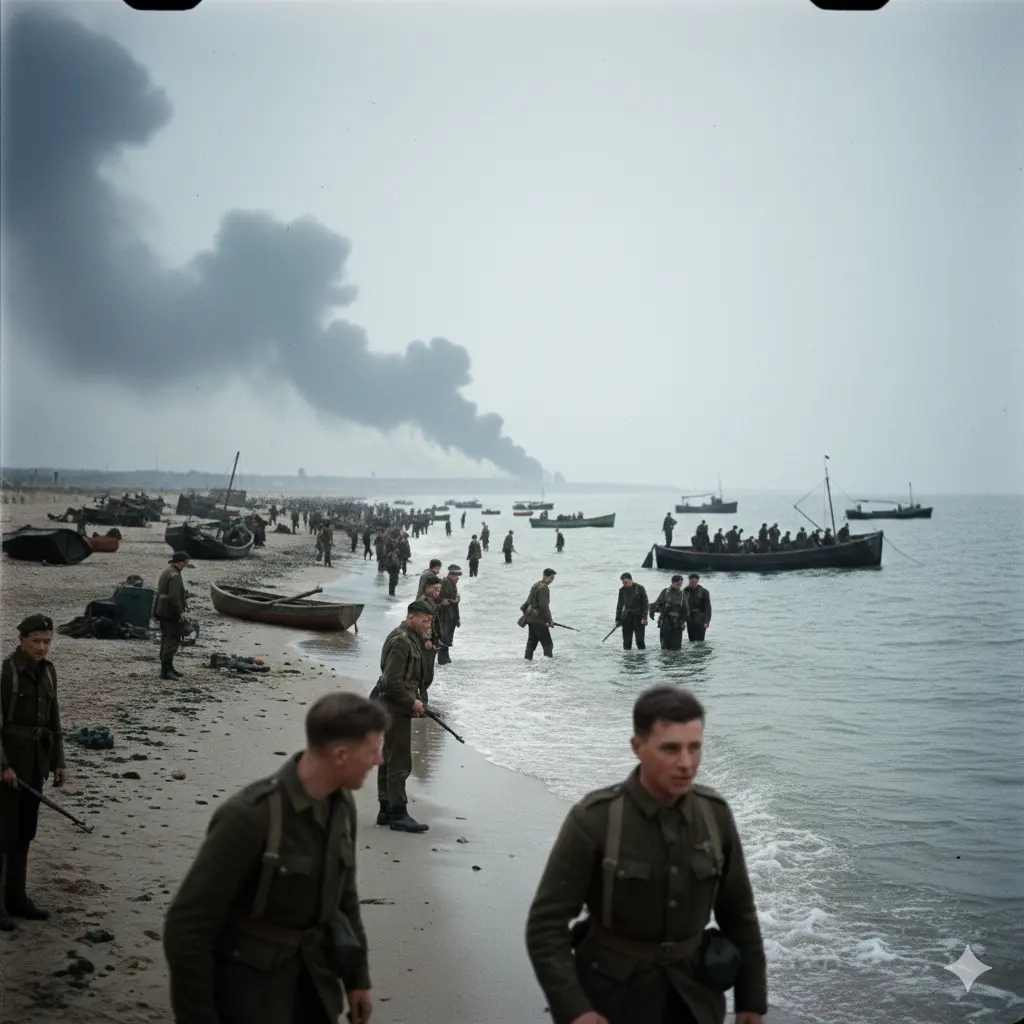
For the soldiers on the ground, the beach became a waiting room for destiny. They destroyed their heavy equipment, vehicles, and artillery to prevent them from falling into enemy hands. The smoke from burning oil tanks blackened the sky, creating a surreal and apocalyptic atmosphere. You can imagine the tension as thousands of men lined up on the sand, scanning the horizon for the Royal Navy, while German Stuka dive-bombers screamed overhead. This was the desperate scenario that necessitated an immediate and unprecedented rescue mission.
Operation Dynamo Takes Shape
The evacuation plan was code-named Operation Dynamo, named after the dynamo room located below Dover Castle where Vice Admiral Bertram Ramsay planned the operation. The logistics were a nightmare. Dunkirk was not a large commercial port capable of handling hundreds of thousands of men, especially while under heavy aerial bombardment. The harbor’s infrastructure was rapidly being destroyed by German bombing raids, rendering the docks largely unusable. This left only the East Mole, a long concrete breakwater, and the open beaches as points of embarkation.
Ramsay and his team worked tirelessly to coordinate a fleet unlike any other. They mobilized destroyers, minesweepers, and transport ships. However, the shallow waters off the coast of Dunkirk prevented large naval vessels from getting close enough to the shore to pick up soldiers directly from the sand. This geographical challenge seemed insurmountable. The men had to wade out into shoulder-deep water, waiting for hours in the cold tide, hoping to be ferried to the larger ships waiting in deeper water.
The operation officially began on May 26, 1940. The first day was discouraging, with only a few thousand men rescued. Panic began to set in among the leadership in London. However, the organization improved rapidly. The Royal Air Force fought fiercely above the channel to protect the defenseless ships below, although many soldiers on the beach bitterly felt the lack of air cover, unaware of the dogfights taking place inland. Operation Dynamo became a race against time, tide, and the enemy, requiring ingenuity and courage from every sailor involved.
The Legend of the Little Ships
The most enduring image of the miracle of dunkirk is undoubtedly the “Little Ships.” Realizing that naval destroyers could not reach the shallow beaches, the British government issued an urgent appeal for small, shallow-draft vessels. The response was nothing short of extraordinary. A flotilla of roughly 700 private boats sailed from Ramsgate and other English ports to aid in the rescue. These were not warships. They were fishing boats, pleasure yachts, lifeboats, paddle steamers, and river barges.
Civilians manned many of these vessels, navigating the dangerous waters of the Channel amidst mines and strafing fire from German aircraft. Others were commandeered by naval officers and crewed by sailors. These tiny boats acted as shuttles, ferrying soldiers from the beaches to the larger destroyers waiting offshore, or carrying men all the way back to England. The sight of this ragtag armada arriving through the smoke provided a massive morale boost to the exhausted troops waiting on the dunes.
The bravery of these civilian crews cannot be overstated. They faced the full might of the German Luftwaffe with no armor and no weapons. Many of the Little Ships were lost, blown out of the water by bombs or swamped by the wake of larger vessels. Yet, they kept returning. This collective effort gave birth to the “Dunkirk Spirit,” a phrase still used today to describe triumph over adversity through community and determination. For travelers, understanding this civilian contribution highlights the total war effort that defined the generation.
The Halt Order Controversy
One of the great mysteries of the miracle of dunkirk is why the German Panzers stopped. Just as the Allied forces were at their most vulnerable, Adolf Hitler issued a halt order on May 24, 1940. The German tanks were poised to crush the remaining pockets of resistance and seize Dunkirk, which would have prevented the evacuation entirely. Instead, they paused for three critical days. This respite gave the Allies just enough time to organize their defenses around the Dunkirk perimeter and begin the evacuation in earnest.
Historians continue to debate the reasons behind this decision. Some attribute it to Field Marshal Gerd von Rundstedt, who wanted to conserve his armored divisions for the upcoming battles south of the Somme against the remaining French forces. The terrain around Dunkirk was marshy and crisscrossed with canals, which was unsuitable for tanks. Others point to Hermann Göring, the head of the Luftwaffe, who boastfully assured Hitler that his air force alone could destroy the trapped Allied army, rendering a ground attack unnecessary.
Regardless of the reasoning, the halt was a strategic blunder for Germany and a divine stroke of luck for the Allies. It allowed the British and French troops to establish a defensive corridor. The French First Army, in particular, fought a heroic rearguard action at the Siege of Lille, holding off seven German divisions. Their sacrifice delayed the German advance and bought precious time for their comrades on the beaches. We must remember that the miracle was paid for with the lives of those who stayed behind to hold the line.
Comparison of WWII Amphibious Operations
We often find that travelers confuse the events of Dunkirk with the D-Day landings. While both occurred on the northern coast of France and involved massive naval movements, they were opposites in almost every way. Here is a breakdown to help you distinguish these two historic events.
| Feature | The Miracle of Dunkirk (1940) | D-Day / Battle of Normandy (1944) |
|---|---|---|
| Objective | Evacuation and Survival (Retreat) | Invasion and Liberation (Attack) |
| Direction | France to England | England to France |
| Primary Forces | British Expeditionary Force, French Army | US, British, Canadian, Free French |
| Outcome | 338,000 troops saved to fight another day | Establishment of a foothold in Europe |
| Key Symbol | The “Little Ships” (Civilian aid) | Landing Craft (Higgins Boats) |
| Strategic Context | Germany dominating Europe | Allies beginning the end of the war |
Churchill and the Turning Point
The evacuation concluded on June 4, 1940. The final tally was staggering. Against all odds, 338,226 soldiers had been rescued, including over 120,000 French troops. While the equipment was lost, the core of the British Army survived. Prime Minister Winston Churchill addressed the House of Commons later that day. He was careful not to paint the event as a victory, famously stating, “Wars are not won by evacuations.” However, he recognized the psychological victory that had been achieved.
Churchill’s speech following Dunkirk is perhaps one of the most famous in the English language. He declared, “We shall fight on the beaches, we shall fight on the landing grounds, we shall fight in the fields and in the streets, we shall fight in the hills; we shall never surrender.” This rhetoric galvanized the British public and signaled to the world, including the United States, that Britain was not defeated. The successful rescue proved that the German war machine was not invincible and that the Allies possessed the resolve to continue the struggle.
The “Miracle” also had profound effects on the American perspective. It demonstrated that Britain was worth supporting. As you explore the history of WWII, you will see how this event laid the groundwork for the Lend-Lease Act and the eventual transatlantic alliance. The soldiers who were saved at Dunkirk became the experienced core of the army that would eventually return to France on D-Day. Without Operation Dynamo, the liberation of Europe would have been delayed by years, or perhaps would never have happened at all.
Visiting Dunkirk Today
For those of you planning a comprehensive WWII history tour, venturing north from Normandy to Dunkirk offers a unique perspective. The town of Dunkirk (Dunkerque) has rebuilt itself, but the echoes of 1940 are still present. The wide, sandy beaches that once held hundreds of thousands of desperate men are now peaceful, yet walking upon them evokes a powerful sense of history. At low tide, you can sometimes still see the wrecks of ships that were lost during the evacuation, ghostly reminders of the cost of freedom.
The Operation Dynamo Museum (Musée Dunkerque 1940) is an essential stop. It is located in the bastions that served as the headquarters for the Allied forces during the battle. The museum houses an impressive collection of weapons, uniforms, and personal items left behind during the retreat. It also features a detailed map explaining the movement of troops and the logistics of the evacuation. Seeing the personal artifacts brings home the reality of the individual soldier’s experience amidst the massive geopolitical event.
Another poignant site is the Memorial to the Missing at the Dunkirk Town Cemetery, which commemorates the 4,500 soldiers of the British Expeditionary Force who have no known grave. Standing there, you realize the magnitude of the sacrifice. While Normandy is often the focus of American travel itineraries, adding Dunkirk provides the full narrative arc of the war in the West. It connects the tragic beginning to the triumphant end, offering a complete picture of the liberation of Europe.
Summary of Operation Dynamo
To help you retain the key facts about this historic event, we have compiled a summary of the most important statistics regarding the evacuation.
| Category | Statistic / Detail |
|---|---|
| Dates | May 26 – June 4, 1940 |
| Total Evacuated | 338,226 Allied Soldiers |
| Vessels Involved | Approximately 861 (approx. 243 sunk) |
| Aircraft Lost | 145 RAF aircraft vs. 156 Luftwaffe aircraft |
| Key Location | The East Mole (Breakwater) and Beaches |
| Historical Impact | Preserved the British Army to fight again |
Why We Remember Dunkirk
The miracle of dunkirk is a testament to the power of hope and human solidarity. It reminds us that even in the face of overwhelming odds, resilience can change the course of history. For the American traveler, it serves as the prologue to the involvement of the United States in the European theater. It sets the stage for the alliance that would eventually storm the beaches of Normandy.
As we guide you through the historic landscapes of France, we encourage you to look beyond the strategies and statistics. Look at the human stories of the fishermen who sailed into war, the soldiers who waited with discipline, and the rearguard who fought to the death. These stories are the fabric of our shared freedom. By remembering Dunkirk, we honor the endurance that made the liberation of Europe possible.
Frequently Asked Questions
Was the Miracle of Dunkirk a victory or a defeat?
Technically, it was a military defeat because the Allies were forced to retreat and leave Europe. However, it is considered a strategic and moral victory because saving 338,000 soldiers prevented Britain’s surrender and allowed the Allies to continue the war.
How far is Dunkirk from the Normandy D-Day beaches?
Dunkirk is located approximately 3 to 4 hours north of the D-Day beaches by car. It is distinct from the Normandy region, situated closer to the Belgian border.
Can you see the “Little Ships” today?
Yes, many of the original Little Ships have been restored and are preserved by the Association of Dunkirk Little Ships. They often participate in commemorative crossings every five years.
Did the French army escape at Dunkirk?
Yes, over 120,000 French soldiers were evacuated alongside the British. However, many French troops remained behind to cover the evacuation and were taken prisoner.
Is the movie “Dunkirk” historically accurate?
Christopher Nolan’s film captures the intensity and sensory experience of the evacuation very well, though it fictionalizes specific characters. It is an excellent way to visualize the conditions of the beach and the role of the civilian boats.