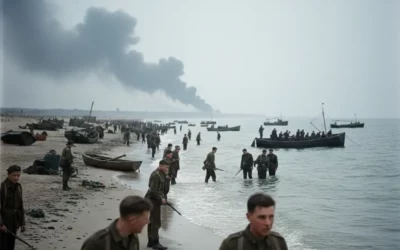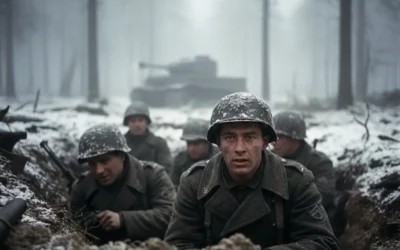
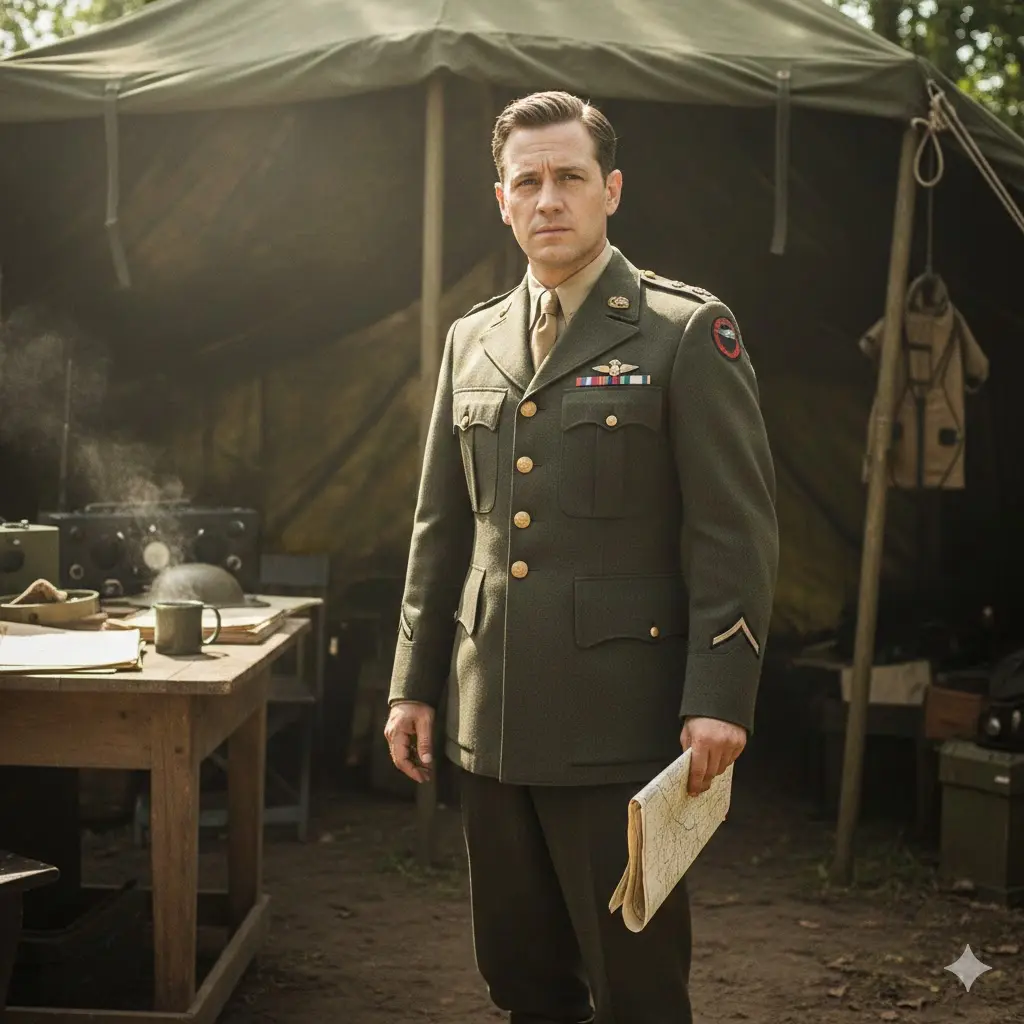
Few names resonate as deeply in the history of the Second World War as Major Richard Winters. For many Americans, he represents the quintessential citizen-soldier who rose to the challenge of liberating Europe with quiet strength and tactical brilliance. While the HBO miniseries Band of Brothers introduced his story to a global audience, the reality of his actions on the ground in Normandy is even more compelling when you examine the historical details. Understanding his path is essential for anyone planning to visit the landing beaches and the hedgerows where the 101st Airborne Division fought.
Richard “Dick” Winters did not seek glory, yet his leadership during the D-Day invasion set a standard that is still taught at military academies today. From the chaotic night drop into Sainte-Mère-Église to the tactical masterpiece at Brécourt Manor, his ability to remain calm under fire saved countless lives. We believe that walking the grounds where he fought offers a profound connection to the past. This guide explores the pivotal moments of Major Winters’ time in Normandy and helps you understand why his legacy endures among the hedgerows of France.
The Early Days and the Path to Command
Before he became the revered leader of Easy Company, Richard Winters was a young man from Pennsylvania looking to do his duty. He enlisted in the Army in 1941 and eventually volunteered for the paratroopers, a new and experimental type of warfare. The training at Camp Toccoa, Georgia, was notoriously brutal. It was designed to weed out the weak and forge a bond among the survivors that would withstand the pressures of combat. It was here that Winters developed his physical stamina and his leadership philosophy. He believed that an officer should never ask a man to do something he was not willing to do himself.
During the pre-invasion period in England, tensions rose within the company due to the harsh command style of Captain Herbert Sobel. Winters, then a First Lieutenant, found himself at the center of a command conflict that almost resulted in a court-martial. However, his men respected him deeply for his fairness and competence. By the time the C-47 transport planes were revving their engines on June 5, 1944, the command structure had shifted. The 101st Airborne Division was about to embark on the largest amphibious invasion in history, and Winters was prepared to lead his men into the unknown.
Into the Night: The Chaos of June 6, 1944
The jump into Normandy in the early hours of June 6 was a disaster for the logistics of the airborne divisions. Heavy cloud cover and intense anti-aircraft fire caused pilots to scatter, resulting in paratroopers dropping miles from their intended drop zones. Major Richard Winters landed near Sainte-Mère-Église, far from his objective and separated from most of his equipment. He lost his leg bag, which contained his primary weapon, leaving him armed only with a knife and the will to survive. This was the first test of his combat leadership.
Instead of panicking, he immediately went to work gathering lost troopers. It did not matter which unit they belonged to; in the dark hedgerows of Normandy, they were all Americans fighting for survival. He collected a small group of men, including members of the 82nd Airborne, and began moving toward the objective near Sainte-Marie-du-Mont. This ability to maintain composure when plans fell apart is what defined his service. As dawn broke over the French countryside, the reality of the invasion became clear. The Germans were entrenched, and the paratroopers were the only line of defense preventing a counterattack on the beaches.
The Tactical Masterpiece at Brécourt Manor
If you visit Normandy today, one of the most significant sites you can view is the field outside Brécourt Manor. On the morning of D-Day, this location was home to a battery of four German 105mm howitzers. These guns were firing directly onto Causeway 2 at Utah Beach, threatening the landing forces of the 4th Infantry Division. The command fell to Winters to destroy these guns. He had only a handful of men against a platoon of approximately 50 German soldiers defending a trench network.
The assault he devised is considered a textbook example of small-unit tactics. Winters set up base of fire machine guns to suppress the enemy while he led flanking teams down the trench line. They used TNT to spike the guns one by one. During this engagement, they also uncovered a map detailing German gun positions across the entire Cotentin Peninsula, an intelligence find of immense value. For his leadership at Brécourt Manor, Winters was nominated for the Medal of Honor, eventually receiving the Distinguished Service Cross. Standing near the memorial at this site today allows you to appreciate the sheer disadvantage they faced and overcame.
Leading the Charge into Carentan
After the initial success of D-Day, the 101st Airborne faced a grueling mission: the capture of Carentan. This town was vital because it linked Utah Beach and Omaha Beach. If the Americans could not take it, the two beachheads remained vulnerable to being split by German armor. The approach to Carentan involved crossing open ground under heavy fire, a stretch of road known as “Purple Heart Lane.” It was here that the physical courage of Major Richard Winters became most visible to his men.
During the assault, the paratroopers pinned down by machine-gun fire froze in the ditches. Recognizing that staying put meant death, Winters stood up in the middle of the road, ignoring the bullets snapping around him, and shouted for his men to move. His physical presence broke the paralysis of the troops. They rose and charged the town, engaging in vicious house-to-house fighting. During the subsequent German counterattack at the “Battle of Bloody Gulch,” his tactical positioning of the company helped hold the line until American armor arrived. This victory secured the unification of the Allied landing forces.
The Leadership Style of Dick Winters
What made Richard Winters such an effective leader was not bluster or volume, but quiet confidence. He cared deeply for the welfare of his men. He was known for checking the sentries in the middle of the night and ensuring his soldiers had ammunition and food before he rested. This paternal yet professional approach fostered a loyalty that is rare in military history. He was not a career soldier in the traditional sense; he was a citizen who wanted to get the job done right so everyone could go home.
His promotion to battalion executive officer later in the war removed him from direct command of Easy Company, a change he found difficult. He preferred to be on the line with his men rather than in a command post. However, his influence remained. The younger officers looked to him for guidance, and the enlisted men saw him as the ultimate authority on combat survival. Even decades after the war, the veterans of Easy Company spoke of him with a reverence reserved for a father figure. His leadership was built on competence, character, and compassion.
Retracing His Footsteps in Normandy Today
For modern travelers, following the path of Major Richard Winters offers a focused and emotional way to experience Normandy. You can start near Sainte-Marie-du-Mont to see the church and the surrounding hedgerows where the paratroopers first rallied. The Utah Beach Museum is an essential stop, as it houses a specific monument dedicated to his leadership, featuring a statue that captures his likeness. It is a place for quiet reflection on the cost of freedom.
While Brécourt Manor is on private property, there is a roadside memorial that offers a clear view of the field where the guns were located. Guides can explain the geometry of the battle from this vantage point. Moving south to Carentan, you can walk the road where he led the charge. The town has embraced its liberators, and you will find markers and tributes to the 101st Airborne throughout the area. Visiting these sites transforms history from a story in a book into a tangible reality beneath your feet.
Battle Comparison: Brécourt Manor vs. Carentan
The two defining engagements for Winters in Normandy required vastly different tactical approaches. This table outlines how his leadership adapted to the situation.
| Feature | Assault on Brécourt Manor | Battle of Carentan |
|---|---|---|
| Objective | Destroy artillery battery firing on Utah Beach. | Capture a strategic town linking beachheads. |
| Terrain | Open fields, hedgerows, and trench networks. | Causeway, open road, and urban combat. |
| Enemy Strength | approx. 50 German defenders (trench system). | Reinforced German Fallschirmjäger regiments. |
| Tactics Used | Flanking maneuvers, small team suppression. | Mass assault, momentum, urban clearing. |
| Key Outcome | Saved lives on the beach; Intel captured. | Unified Omaha and Utah Beaches. |
The Enduring Legacy of a Humble Hero
Richard Winters passed away in 2011, but his legacy in Normandy is immortal. He requested a private funeral, consistent with his humble nature, yet his impact is public and global. He represents the best of the “Greatest Generation.” He did not glorify war; in fact, he often spoke of his desire for a quiet life in peace. However, when the world needed leaders to stand against tyranny, he stepped forward.
Studying his life reminds us that history is made by individuals making difficult choices under extreme pressure. Whether you are a military historian or a casual traveler, the story of the man who led the Band of Brothers adds a profound layer of meaning to the landscape of Normandy. We encourage you to visit these hallowed grounds not just to see the battlefields, but to honor the spirit of the men who fought there.
Summary of Major Winters’ Normandy Campaign
| Date (1944) | Location | Key Event |
|---|---|---|
| June 6 (AM) | Sainte-Mère-Église | Misdropped, gathered stragglers, moved to objective. |
| June 6 (Morning) | Brécourt Manor | Led assault to destroy 105mm guns; awarded DSC. |
| June 7-10 | Carentan Outskirts | Skirmishes and preparation for the assault on the town. |
| June 12 | Carentan | Led the charge into the city; secured key crossroads. |
| June 13 | Bloody Gulch | Defended against heavy German counterattack. |
| July | France | Promoted to Captain; Easy Company moves out of Normandy. |
Frequently Asked Questions
What rank was Richard Winters on D-Day?
On D-Day, Richard Winters was a First Lieutenant. He assumed command of Easy Company after the company commander, First Lieutenant Thomas Meehan, was killed when his plane was shot down during the drop. Winters was later promoted to Captain in early July 1944 while in France.
Where is the Richard Winters memorial located?
The Richard D. Winters Leadership Monument is located near Sainte-Marie-du-Mont, on the road leading to Utah Beach. It features a statue of Winters and is dedicated to all junior officers who led the assault on D-Day. It is a poignant site that we highly recommend visiting.
Can you visit the trenches at Brécourt Manor?
Brécourt Manor is private property and remains a working farm. You cannot walk through the fields or the manor grounds themselves. However, there is a specific viewing area with a memorial on the public road that overlooks the field, allowing you to see exactly where the action took place.
Did Major Winters receive the Medal of Honor?
No, Major Winters received the Distinguished Service Cross, the second-highest military decoration, for his actions at Brécourt Manor. There has been a long-standing campaign by historians and veterans to upgrade this award to the Medal of Honor, but as of now, the upgrade has not been granted.
Where was Major Richard Winters buried?
In accordance with his wishes, Major Winters was buried in a private ceremony in Ephrata, Pennsylvania. He did not want a large public funeral, preferring to rest quietly near his home. His grave is marked simply, reflecting his modest character.