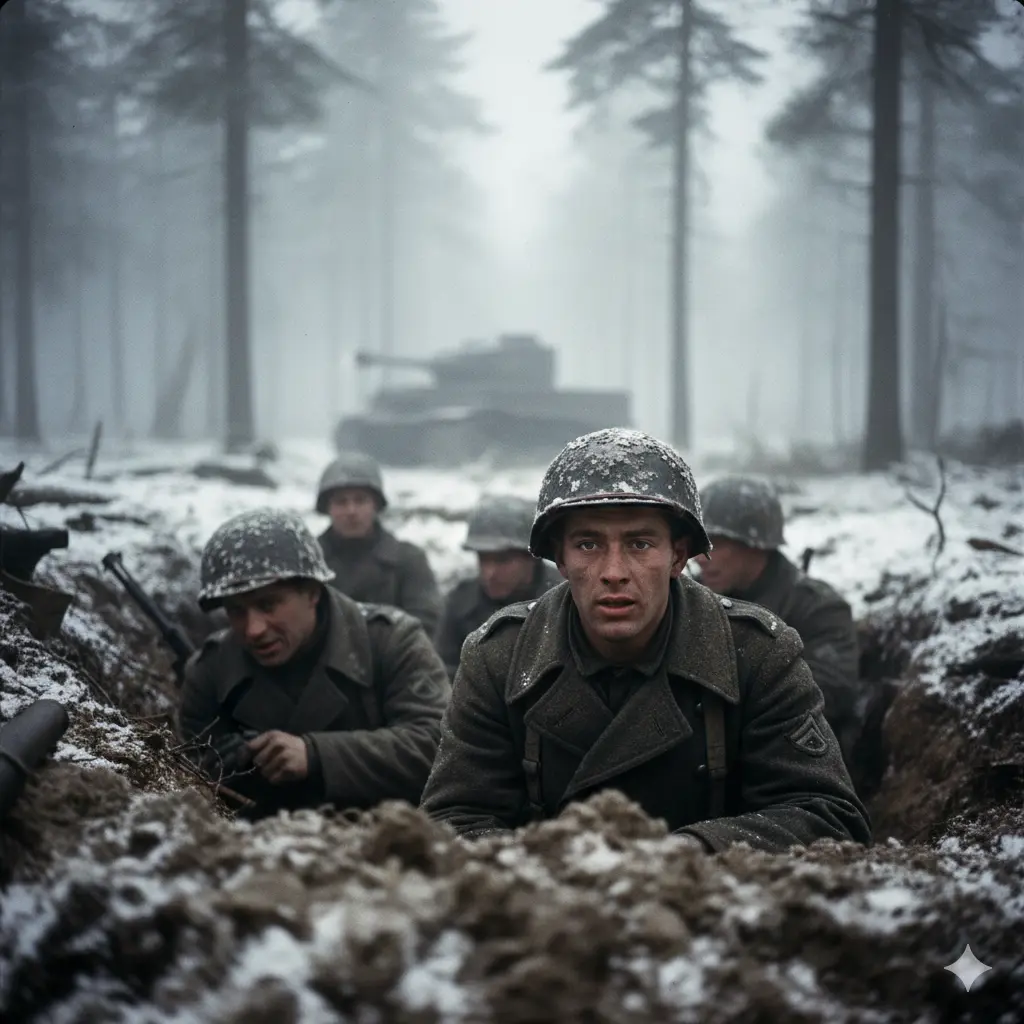
The winter of 1944 in the Ardennes Forest was one of the coldest on record, yet the heat of battle would soon melt the snow and change the course of history. When we look back at the timeline of World War II, few events capture the American imagination quite like the Battle of the Bulge. It stands as the largest and bloodiest single battle fought by the United States in World War II. For many of you planning a trip to Europe to honor this history, understanding the sheer scale and desperation of this conflict is essential. It was not merely a fight for territory; it was a test of will against a dying regime throwing its final, desperate punch.
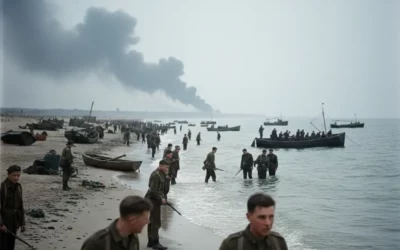
Most travelers we speak with are intimately familiar with the beaches of Normandy, but the Ardennes Offensive offers a different, starker narrative. While D-Day was a calculated invasion, the Bulge was a chaotic survival story. It began on December 16, 1944, when over 200,000 German troops and nearly 1,000 tanks launched a surprise attack against Allied forces. The goal was to split the British and American Allied line in half, capture Antwerp, and encircle four Allied armies. For the American soldiers on the ground, however, grand strategy mattered less than staying alive in foxholes dug into the frozen earth. This guide will take you through the pivotal moments of this historic clash.
The Last German Gamble in the West
By late 1944, the Allied forces had successfully pushed through France and were standing on the doorstep of Germany. The general mood among the high command was that the war in Europe was nearing its end. However, Adolf Hitler had other plans. He conceived a plan codenamed “Watch on the Rhine” which relied heavily on total surprise, poor weather to ground Allied air superiority, and the sheer speed of his Panzer divisions. The region chosen for this attack was the Ardennes, a dense, hilly woodland that extended through Belgium and Luxembourg. This area was known as the “Ghost Front” because it was thinly defended by weary troops resting from battle and inexperienced replacements who had never seen combat.
The German strategy relied on a “Blitzkrieg” approach to punch a hole in the American lines. Hitler believed that a decisive victory here would force the Western Allies to negotiate a separate peace treaty, allowing Germany to focus solely on the Soviet Union in the East. Intelligence failures on the Allied side contributed to the shock. American commanders did not believe the Germans had the fuel or the manpower to launch a major offensive. Consequently, when the artillery barrage began at 5:30 AM on December 16, the American soldiers stationed there were caught completely off guard. The German forces managed to create a “bulge” in the Allied front line, giving the battle its famous name. This initial success for the Germans caused confusion and panic, but it also set the stage for some of the most heroic defensive stands in American military history.
The Siege of Bastogne and the 101st Airborne
If there is one location that serves as the emotional heart of the Battle of the Bulge, it is the town of Bastogne. This small Belgian market town was a critical road junction. Seven main roads converged in Bastogne, and the Germans needed control of these roads to move their tanks toward the coast. Recognizing its importance, the Supreme Allied Commander, General Dwight D. Eisenhower, dispatched the elite 101st Airborne Division to hold the town at all costs. The paratroopers arrived just before the Germans encircled the town, cutting off all supply lines. For several days, the “Battered Bastards of Bastogne” held out against overwhelming odds, lacking cold-weather gear, ammunition, and medical supplies.
The situation inside the perimeter was dire. Temperatures dropped well below zero, and the wounded could not be evacuated. Despite this, the morale of the American troops remained surprisingly unbroken. On December 22, the German commander sent a message to the American headquarters in Bastogne demanding an immediate surrender to save the troops from total annihilation. The American commander, Brigadier General Anthony McAuliffe, famously responded with a single word: “NUTS!” This defiant reply confused the German officers but perfectly encapsulated the American spirit. The siege was finally broken on December 26 by elements of General Patton’s Third Army, but the defense of Bastogne remains a legendary chapter in the history of the 101st Airborne and the US Army.
The Malmedy Massacre and War Crimes
The Battle of the Bulge was not only defined by strategic maneuvers and heroic defenses but also by brutal atrocities. On the second day of the offensive, December 17, a grim event occurred near the town of Malmedy. A convoy of the US 285th Field Artillery Observation Battalion was intercepted by a German SS Panzer division led by Joachim Peiper. The American soldiers, outgunned and surrounded, surrendered to the German forces. Under the rules of war, these men should have been taken as prisoners and treated humanely. Instead, they were gathered in a field and gunned down by machine-gun fire and pistols.
Approximately 84 American prisoners of war were murdered in what became known as the Malmedy Massacre. A few survivors managed to feign death and escape into the woods to tell the story. Word of the massacre spread quickly through the American lines, hardening the resolve of the GIs. The knowledge that surrender might mean death changed the tenor of the fighting; it became more vicious and desperate. When you visit the memorial at the Baugnez crossroads today, it serves as a somber reminder of the brutality of the conflict. It is a necessary stop for anyone wishing to understand the full scope of suffering that occurred during those dark winter weeks. We always advise travelers to pay their respects here, as it highlights the stark reality faced by the young men who fought for liberation.
Turning the Tide: Patton and the Weather
While the Germans enjoyed initial success due to the element of surprise and the thick cloud cover that grounded Allied planes, the tide began to turn around Christmas. Two major factors contributed to the Allied victory: the arrival of General George S. Patton’s Third Army and the clearing of the weather. Patton pulled off one of the most remarkable logistical feats in military history. He disengaged his army from combat in the Saar region, rotated them 90 degrees, and marched them nearly 100 miles through snow and ice in just a few days to relieve the forces at Bastogne. His aggression and tactical brilliance were instrumental in halting the German advance.
Simultaneously, the weather cleared on December 23. This allowed the mighty Allied air forces to take to the skies once again. Thunderbolts and Typhoons began hammering German supply columns, which were already critically low on fuel. The German tanks, including the fearsome King Tigers, began to run out of gas and were abandoned by their crews. Air superiority allowed the Allies to drop supplies to the besieged troops in Bastogne and bomb German infrastructure. By mid-January 1945, the original front line was restored, and the “bulge” was eliminated. The Germans had exhausted their last reserves of men and equipment, accelerating the end of the Third Reich. The victory was decisive, but the cost was astronomical for both sides.
Battle Comparison: Normandy vs. The Bulge
We often find that travelers confuse the scale and style of these two massive engagements. The following table breaks down the key differences between the Battle of Normandy and the Battle of the Bulge to help you understand the distinct nature of each conflict.
| Feature | Battle of Normandy (D-Day & Beyond) | Battle of the Bulge (Ardennes) |
|---|---|---|
| Season | Summer (June – August 1944) | Winter (December 1944 – January 1945) |
| Nature of Battle | Amphibious Invasion & Offensive | Defensive Surprise Attack & Counter-offensive |
| Terrain | Beaches, Hedgerows (Bocage), Plains | Dense Forests, Hills, Narrow Roads |
| Key Challenge | Breaking Atlantic Wall fortifications | Freezing cold, frostbite, supply shortages |
| Strategic Goal | Establish a foothold in Europe | Repel the last German counter-attack |
| Casualties (US) | Approx. 29,000 killed | Approx. 19,000 killed |
The Human Cost and Legacy
The statistics of the Battle of the Bulge are sobering. It involved over one million soldiers: 600,000 Germans, 500,000 Americans, and 55,000 British. The casualty counts were horrific. The United States suffered over 89,000 casualties, including 19,000 killed, making it the bloodiest battle for the US in World War II. Germany suffered nearly 100,000 casualties. Beyond the military losses, thousands of Belgian civilians were killed during the fighting or executed by German forces. The physical destruction of towns like Bastogne and St. Vith was nearly total. Yet, from this devastation emerged a legacy of resilience that bonds the United States and Belgium to this day.
For the modern American traveler, the legacy of the Bulge is visible in the numerous cemeteries and memorials scattered throughout the Ardennes. The Luxembourg American Cemetery, where General Patton is buried alongside his men, is a place of profound peace and reflection. Visiting these sites offers a tangible connection to the past that books and documentaries simply cannot provide. The local people in the Ardennes have never forgotten their liberators. You will often see American flags flying alongside Belgian ones in front of homes and businesses. This enduring gratitude is a testament to the sacrifice made by the young Americans who spent their Christmas in the freezing snow of 1944 so that Europe could be free.
Summary of Key Events
| Date | Event | Significance |
|---|---|---|
| Dec 16, 1944 | German Attack Begins | Surprise offensive catches Allies off guard. |
| Dec 17, 1944 | Malmedy Massacre | 84 American POWs murdered by SS troops. |
| Dec 20, 1944 | Siege of Bastogne | 101st Airborne encircled at critical road junction. |
| Dec 22, 1944 | “NUTS!” Response | Gen. McAuliffe refuses German surrender demand. |
| Dec 26, 1944 | Siege Broken | Patton’s Third Army breaks through to Bastogne. |
| Jan 25, 1945 | Battle Ends | Allied lines restored; German reserves depleted. |
Planning Your Historical Pilgrimage
While our expertise is deeply rooted in the Normandy region, we understand that for many of you, the story of liberation does not end at Omaha Beach. The drive from Normandy to the Ardennes takes approximately five to six hours, making it a feasible extension to your trip. We recommend dedicating at least two full days to the Ardennes region to truly appreciate the landscape and the history. The terrain is hilly and wooded, quite different from the flat hedgerow country of Normandy. Seeing the foxholes that are still visible in the Jacques Wood near Foy gives you a chilling perspective on the conditions soldiers endured.
When you visit, be sure to dress warmly, even in autumn or spring, as the region can be quite cool. We suggest starting at the Bastogne War Museum, which offers an immersive experience, and then visiting the Mardasson Memorial nearby. From there, you can explore the various foxholes and battle sites. Remember that this is hallowed ground. Walking through these silent forests where so much history happened is a moving experience that stays with you long after you return home. It completes the narrative arc of the American soldier in Europe, from the landings on the coast to the final, freezing test of endurance in the forest.
Preserving the Memory
As time passes, the generation that fought in the Battle of the Bulge is leaving us. This makes our responsibility to remember and retell their stories even more critical. By traveling to these sites, reading the history, and sharing it with younger generations, we ensure that the sacrifices made in the winter of 1944 are never forgotten. The Battle of the Bulge was a victory of determination over desperation, and it serves as a powerful reminder of the cost of freedom. Whether you are a history buff or simply an American looking to connect with your heritage, the story of the Bulge is your story too.
We hope this guide has provided you with a deeper understanding of this complex and pivotal battle. The courage displayed by the average GI in the face of overwhelming odds and brutal weather is a standard of bravery that continues to inspire us. As you plan your travels through the historic battlefields of Europe, let the memory of the Ardennes stand as a reminder of resilience. We invite you to continue exploring the history of World War II with us, ensuring that the legacy of those who fought lives on.
Frequently Asked Questions
Why was it called the Battle of the Bulge?
The name comes from the description of the front lines on military maps. The German attack created a large inward “bulge” in the Allied defensive line as they pushed westward into Belgium and Luxembourg.
Who won the Battle of the Bulge?
The Allied forces, primarily the United States Army with support from the British, won the battle. They successfully halted the German advance and pushed them back to their original starting positions by late January 1945.
How cold was it during the Battle of the Bulge?
It was one of the coldest winters on record in Europe. Temperatures frequently dropped to 0°F (-18°C) and below, causing thousands of cases of frostbite and trench foot among the troops who lacked proper winter clothing.
Is Bastogne worth visiting?
Absolutely. Bastogne is central to the history of the battle. The town features the excellent Bastogne War Museum, the Mardasson Memorial, and preserved foxholes in the nearby woods that offer a tangible connection to the past.
Can I visit the Battle of the Bulge sites from Normandy?
Yes, but it is best done as an overnight trip or a trip extension. The drive is roughly 5 to 6 hours from the Normandy coast to the Bastogne area. We recommend spending at least two days in the Ardennes to see the major sites.